
Most buyers think about home insurance after they move in. On a new build, your lender wants proof of it before it will release the mortgage funds. Here is how the sequence actually works, and what to ask about on a brand new lot.
Why insurance comes before the keys, not after
On a pre-construction purchase, the order of events surprises people. You sign, you wait, you go to a design appointment, you do a pre-delivery inspection, and then at some point your lawyer asks for your insurance information. That request is not administrative housekeeping. A lender will generally not advance mortgage funds without evidence that the property is insured, effective on the closing date, with the lender named as it requires.
So the practical deadline for arranging coverage is before closing, not before move-in. If it is not in place, funds do not move, and a closing can be delayed over something that takes an afternoon to arrange. Ask your lawyer and your mortgage broker, early, exactly what they will need and by when. Our guide to working with a lawyer on a new-build purchase in Ontario covers how that file comes together.
Treat this as one of the real costs and tasks of closing rather than an afterthought. It sits alongside the other items in pre-construction closing costs in Ontario.
What the builder's insurance covers, and what it stops covering
While the home is being built, the builder carries its own coverage on the construction site. That protects the builder's work and the builder's liability. It is not your policy, you are not a party to it, and it does not follow you past closing.
Two things commonly get confused here.
- Construction-period coverage is not your homeowner policy. It does not cover your belongings, your liability as an occupant, or your living expenses if something goes wrong after you take possession.
- A warranty is not insurance. In Ontario, new homes come with statutory warranty coverage, which addresses defects and certain other matters on defined terms and timelines. It does not respond to a fire, a theft, or a guest injured on your steps. Read what a Tarion warranty is and how it protects you for what that programme does and does not reach.
Your own policy picks up where both of those stop. The handover point is the closing date, which is why the effective date on your policy matters more than almost anything else about it.
Getting a quote on a house that does not exist yet
Insuring a home that is still framed, or still a graded lot, is routine for brokers who work in new subdivisions, but it does require different information than a resale quote.
What you will likely be asked for
- The municipal address assigned to the lot. On a new street, the address and postal code may be issued late in the process. If a quoting system will not accept it, that is usually a data lag, not a problem with your file. Ask the builder's customer care contact what address has been assigned and when it will be recognized.
- Square footage, number of storeys, garage configuration, and whether the basement is finished by the builder.
- Construction details: year built, roof, exterior finish, heating system, plumbing and electrical. All new, which generally works in your favour.
- The rebuilding cost of the structure, which is not the same number as your purchase price and not the same as the land value. Insurers calculate it their own way.
- Protective details such as a monitored alarm, water shutoff devices, or a sprinklered design, if applicable.
Quote early so you know what you are dealing with, then arrange to have the policy bound close to the actual closing date. Firm up dates with your lawyer, because on new builds the closing date can shift.
If a lender has already issued your approval, keep an eye on how long it holds. The same volatility that moves a closing date can outlive a rate hold, which is the subject of getting a mortgage pre-approval that survives to closing.
Coverages worth asking about on a brand new lot
A new home on a new street has a slightly different risk profile than a forty-year-old house, and a few specific endorsements are worth raising by name rather than assuming they are included.
- Sewer backup and overland water. In most Ontario policies these are optional add-ons, sometimes sold separately from each other. Ask which ones your quote includes, and what the limits and deductibles are.
- Grading and drainage context. New lots are graded to an engineered pattern, and water is deliberately directed across the property to the street or a swale. Understanding where water is meant to go on your lot is useful both for insurance conversations and for not creating a problem later by changing it. See lot grading, drainage and easements on a new Vaughan lot.
- Liability. Standard on a homeowner policy, but confirm the limit, particularly if you plan a pool, a trampoline, or a basement apartment at any point.
- Vacancy or unoccupied periods. If you close before you move in, tell your broker. Most policies treat an unoccupied home differently, and a silent gap is the kind of thing that only surfaces at claim time.
- Construction nearby. If you are in an early phase, there may be active building beside you for a while. That affects dust, debris and occasional damage, not usually your rates, but it is worth knowing your own policy's position on who you call first.
- Contents and off-premises coverage during a move, which is often where losses actually happen.
None of this requires technical knowledge on your part. It requires asking a broker to confirm, in writing, what is in and what is out.
Title insurance is a separate thing
Title insurance is arranged through your lawyer, usually at closing, and it covers title defects, certain registration problems, and some forms of fraud. It is not property insurance, it does not replace it, and the lender may require its own coverage as well. Ask your lawyer which policies are being purchased on your file, who is insured under each, and what it costs.
Townhomes: check which structure you are actually insuring
How you insure a townhome depends on the form of ownership. A freehold townhome is insured much like a detached house: you cover the structure. In a condominium arrangement, a corporation insures the common elements and standard units, and owners insure their own improvements, contents and liability, which usually means a different type of policy. These are not interchangeable, and the answer sits in the purchase documents rather than in the sales brochure. Our explainer on freehold and condo townhomes in Ontario covers why the distinction matters, and your lawyer can confirm which applies to the home you are buying.
A sequence that works
- Ask your lawyer and lender, well before closing, what insurance evidence they require and in what form.
- Get quotes once you have real specifications from the builder, not before.
- Confirm the assigned municipal address with the builder's customer care contact.
- Bind the policy with an effective date matching the closing date, and ask to be told if the closing date moves.
- Keep your pre-delivery inspection paperwork. It documents the condition of the home at handover, which is useful context if anything is disputed later. See your pre-delivery inspection.
- Set up utilities and mail on the same timeline so nothing lands on move-in day. Our notes on setting up utilities, mail and waste collection cover the Vaughan specifics.
Local context at The Valleys of Thornhill
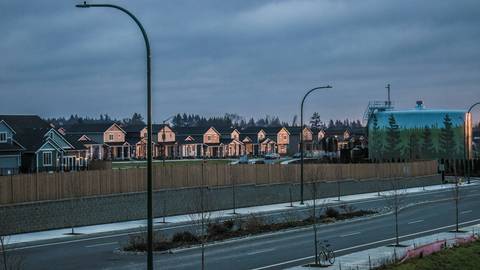
The Valleys of Thornhill is in the City of Vaughan, in York Region, just off Major Mackenzie Drive West between Dufferin Street and Bathurst Street. Despite the community name it is not in Thornhill: the postal city is Maple, and the surrounding area is known as Patterson and Carrville. That distinction matters for insurance paperwork, because the address you give a broker should match what the municipality and Canada Post actually recognize, not the community's marketing name.
Three builders are involved here, each delivering a different kind of home: Treasure Hill builds 2-car garage townhomes, Starlane Home Corp. builds 2-car garage 33-foot singles, and Greenpark Group builds 2 and 3-car garage 38-foot and 50-foot singles. Because the product differs, so do the specifications a broker will ask you about. Background on each is on our builders page, and an overview of the community is on the development.
This site is an independent information resource. We are not a builder, we do not represent one, and nothing here is insurance or legal advice. Confirm coverage with a licensed insurance broker, confirm closing requirements with your lawyer and lender, and confirm home specifications with the builder's sales office. If you want help putting together the list of questions to take into those conversations, get in touch.
Have Questions About Pre-Construction?
Matthew Caporiccio can help you understand pricing, deposit structures, and availability at The Valleys of Thornhill and other pre-construction projects across the GTA.