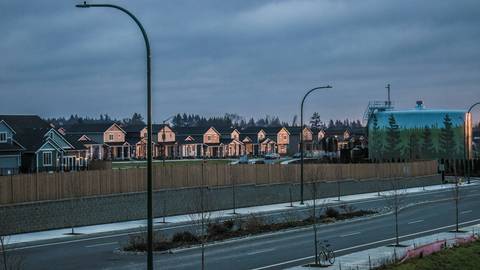

Townhomes in Ontario come in two quite different ownership structures, and the difference is not visible from the street. It determines what you own, what you maintain and what you pay every month.
Same Building, Different Ownership
Two townhomes can sit on the same street, look identical and be owned in completely different ways. One is freehold. The other is a condominium. Nothing about the exterior tells you which, and buyers regularly reach an advanced stage before anyone makes the distinction clear.
It is worth getting straight early, because it affects what you own, what you are responsible for, what you pay monthly and how the home behaves on resale.
Freehold
In a freehold townhome you own the land your home sits on and the structure on it, within the boundaries of your lot. The shared walls are party walls between neighbouring owners, governed by the usual arrangements, but the ownership is yours.
The practical consequences are straightforward. You maintain your own home and your own property. There is no monthly common-element fee, because there is no corporation holding common property on your behalf. Decisions about your roof, windows and landscaping are yours, subject to any restrictions registered on title and to municipal rules.
The flipside is that the responsibility is also entirely yours. When the roof needs attention, it is your project and your budget, and there is no reserve fund that has been accumulating toward it.
The townhomes at The Valleys of Thornhill are freehold, which is why this article is relevant to buyers here rather than purely academic. You can see the collection on the townhomes page.
Condominium
In a condominium townhome you own your unit, and you own a share of the common elements along with every other owner. A corporation administers those common elements on behalf of the owners.
What counts as common varies between corporations. It can include the roof, exterior walls, windows, landscaping, private roads, visitor parking and amenity space. The governing documents define it, which is why those documents are the single most important thing to read before committing.
Owners pay a monthly common-element fee. That fee funds maintenance of the shared items and contributes to a reserve fund for major future work. It is not optional, it changes over time, and it is a permanent part of the cost of ownership alongside the mortgage and the taxes.
The Monthly Cost Question
This is where comparisons go wrong most often.
It is tempting to treat a freehold townhome as cheaper because it has no monthly fee. That is only true if nothing ever needs doing, which is not how buildings work. The freehold owner is self-funding the same categories of work; they are simply doing it on their own timetable, out of their own reserve, rather than through a corporation.
The genuine differences are who decides, who holds the money, and whether the cost is smoothed into monthly instalments or arrives in lumps. A buyer who is disciplined about setting money aside may prefer the freehold arrangement. A buyer who would rather not think about the roof may prefer the condominium one. Neither preference is wrong.
Control and Restrictions
A condominium corporation can impose rules: on exterior alterations, on parking, on pets, on what may be stored where. For some owners those rules are a nuisance. For others they are the mechanism that keeps the street looking consistent and protects their own investment from a neighbour's choices.
Freehold ownership gives more individual latitude, though not unlimited latitude, since restrictions can be registered on title and municipal by-laws still apply.
Resale
Both forms sell. The difference is in what a future buyer is assessing.
A freehold townhome is evaluated largely on its own condition. A condominium townhome is evaluated on its condition and on the health of the corporation, including the adequacy of the reserve fund and whether a special assessment looks likely. A well-run corporation is a positive; a poorly funded one is a real drag on value.
Questions to Ask
- Is this townhome freehold or condominium? Ask explicitly rather than assuming.
- If it is a condominium, what exactly do the common elements include?
- What is the monthly fee, what does it cover, and how has it moved?
- If it is freehold, are there restrictions registered on title?
- What am I responsible for maintaining in each case?
Your lawyer should walk you through the answers as part of reviewing your agreement of purchase and sale. If you are weighing townhome against detached more generally, our article on alternatives to a detached home covers that comparison, and you can reach us through the contact page.
Have Questions About Pre-Construction?
Matthew Caporiccio can help you understand pricing, deposit structures, and availability at The Valleys of Thornhill and other pre-construction projects across the GTA.