A new community shows you its best face in June. A winter visit shows you the rest: where the snow goes, which driveways stay icy, and how long the walk to the community centre really feels in January.
Winter hides less than summer does
Most people tour a new community between May and September. The sod is green, the boulevard trees have leaves, and the street looks generous. That visit is pleasant and it is also the least informative one you can make.
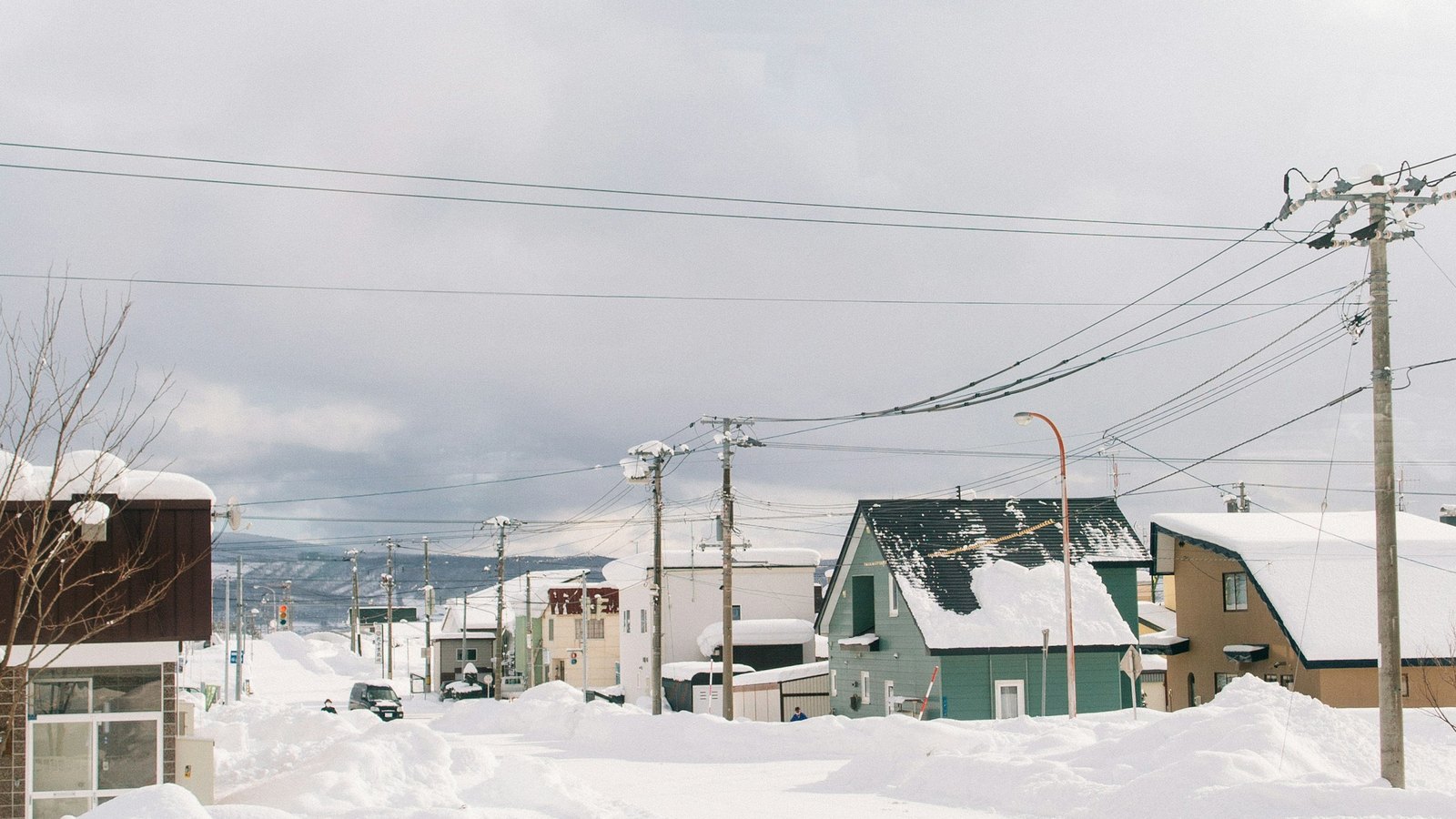
A January or February drive through the same area tells you things the summer visit cannot. You find out where plowed snow ends up, how wide the road actually is once banks form along both curbs, which driveways are bare by mid-afternoon and which are still white, and how dark the walk home is at 5:00 pm.
The Valleys of Thornhill sits in the City of Vaughan, just off Major Mackenzie Drive West between Dufferin Street and Bathurst Street, in the Patterson and Carrville area of Maple. Much of the surrounding area is established, which means a winter drive gives you real, observable information about how the streets around the community are maintained and lived in. Here is what to look at.
Start with the street, not the house
Stand in the middle of a residential street in winter and look at the curbs. Snow has to go somewhere, and in a subdivision it goes to the edges. A road that comfortably fits two moving cars and parked cars in August can become a single usable lane in February.
Specific things to note:
- Effective road width. How much of the pavement is left once the banks are in place? Can two cars pass without one pulling over?
- On-street parking. Are cars parked on the street in winter, and if so, where do they end up relative to the snowbanks? Municipalities commonly restrict overnight on-street parking during snow events. Do not guess at the rule here. Check the City of Vaughan's parking and winter maintenance pages, or call the City directly, and get the restriction in writing before you plan on parking a second or third vehicle at the curb.
- Windrows. When a plow passes, it leaves a ridge across the end of each driveway. Look at how big those ridges are on the street you are considering. That ridge is the part of snow clearing nobody shows you in a rendering.
- Corner and bulb lots. A corner lot has two frontages to clear. A lot on the bulb of a cul-de-sac often has limited frontage for snow storage. Both are trade-offs, not flaws, but you should know which one you are choosing.
- Sidewalks. Are they cleared, and to what standard? Responsibility for sidewalk clearing varies by municipality and sometimes by street classification. Ask the City which sidewalks near the community it clears.
Driveways, garages and where the car actually sits in February
Garage and driveway capacity matters more in winter than in any other season, because a car that does not fit inside is a car you scrape at 7:00 am.
The three builders at this community each deliver a different configuration. Treasure Hill builds the 2-car garage townhomes. Starlane Home Corp. builds 2-car garage 33-foot singles. Greenpark Group builds 2 and 3-car garage 38-foot and 50-foot singles. We cover how that plays out for day-to-day parking in garages and parking across the homes here, and the builders themselves are summarised on the builders page.
On a winter drive, the useful observation is not the garage count on the brochure. It is how many vehicles you can see on driveways and at the curb on comparable streets nearby. If most two-car garages in the area have two more cars sitting outside, that is a signal about how garage space tends to get used once storage, bikes and recycling bins move in.
Driveway slope
Look at driveways that run downhill toward the garage. Meltwater follows gravity, and on a mild afternoon followed by a cold night it refreezes at the lowest point, which is the garage door. If you are looking at a street with noticeable grade, ask the builder whether a drain is provided at the base of the driveway and ask to see the lot grading plan for the specific lot.
Ice, water and grading
Winter is a free drainage test. Snowmelt shows you exactly where water travels on a property, which is the same path it will take during an April rain.
Walk the frontage and look for ice sheets. They form in predictable places: at the bottom of sloped walkways, where a downspout discharges onto a path instead of into a swale, at the join between driveway and municipal sidewalk, and anywhere a flat area sits below a higher one. Ice at the front door is a nuisance. Ice that signals water pooling against a foundation is worth asking about.
Newly graded lots also settle in their first years, and sod, trees and swales take time to establish. That is normal in any new subdivision and we go through what the first seasons look like in your first year living in a brand new community.
Sun, wind and which way the house faces
In late December the sun sits low in the southern sky, and front-yard orientation has a visible effect on how long snow and ice linger. Drive the same street twice, once around 9:00 am and once around 3:00 pm, and note which driveways are dry pavement and which are still packed white. You are reading the orientation directly off the ground, without needing a compass or a sun-path chart.
A south-facing front typically clears faster, which is genuinely convenient. The trade-off is a south-facing front room that takes more summer heat and a north-facing rear yard. Neither orientation is correct; it depends on whether you care more about the driveway in February or the yard in July.
Wind is the other thing winter exposes. Edges of a community that back onto open land, a valley or a wide corridor can get drifting that interior streets do not. Note which edges are exposed, and ask what is planned for the land beyond. For the fundamentals of where the community sits and what surrounds it, see our location and neighbourhood guide.
Walk the January version of your daily routine
Distances on a map are summer distances. The honest test is to park and walk the route you expect to use, in boots, in the cold, in the dark if you can manage it.
Several destinations here are close enough that walking is realistic rather than theoretical. Carrville Community Centre is 0.3 km and walkable. Carrville Library is 0.4 km and walkable. Pioneer Park is 0.7 km and walkable. Heritage Park is 0.9 km, about a 1 minute drive.
If the walk matters to you, check the practical details on foot: is the sidewalk continuous, is it lit, where are the crossings, and does the route require crossing a busy arterial. Anne Frank Public School is 0.8 km away, about a 1 minute drive, and Alexander MacKenzie High School is 2.9 km, roughly 5 minutes by car. School assignment is set by the school boards and boundaries change, so confirm the current catchment with the York Region District School Board or the York Catholic District School Board rather than relying on a list. We cover the nearby options in schools and parks near the community.
The drive out, on a bad morning
Arterial roads are usually cleared on a different schedule than local residential streets, so your winter commute is really two commutes: the slow part getting off your street, and the normal part once you reach a main road. Major Mackenzie Drive West is the arterial here. Ask the City of Vaughan for its winter maintenance service levels, which set out the order in which road classes are cleared and the target times. That document answers the question better than any sales office can.
Transit and highway options are worth driving yourself rather than taking on trust. Maple GO Station is 3.3 km away, about 6 minutes by car. Rutherford GO Station is 4.6 km, roughly 7 minutes. Vaughan Metropolitan Centre Station is 14.1 km, about 16 minutes. In winter, add time for the station parking lot, which is the part of the trip people forget to budget for. More detail is in commuting from the community by GO, subway and highway.
Do the same for errands and care. Longo's and the Walmart Supercentre are each 2.8 km, about 5 minutes. Mackenzie Health — Richmond Hill Hospital is 3.0 km, roughly 5 minutes, and Cortellucci Vaughan Hospital is 6.4 km, about 10 minutes. See daily errands in Carrville for the full picture.
Separate the construction site from the finished street
Where building is underway, a winter drive will show you mud, truck traffic, temporary access routes and partially completed boulevards. That is what an active work site looks like in any season, and it is not evidence about how the street will function once it is complete and assumed by the City.
The useful comparison is a nearby street of the same type that was finished several years ago. Drive both. One tells you about the construction period; the other tells you about the decade after it.
What a drive cannot tell you, and how to find out
Some of the most important winter questions are contractual rather than visual:
- Who clears the road. On a freehold street assumed by the municipality, the City plows. On a common-element or condominium road, clearing is arranged privately and paid through fees. This single distinction changes both the service and the cost. See freehold and condo townhomes in Ontario, then confirm the tenure of the specific home in your agreement of purchase and sale.
- Snow storage obligations. Ask whether there are restrictions on where you may pile snow, particularly on narrow frontages and corner lots.
- Service levels and parking rules. Get these from the City of Vaughan, in writing.
- Grading and drainage. Ask the builder for the lot grading plan and ask where the swale runs.
A short winter checklist to bring with you: effective road width with banks in place; windrow size across driveways; which driveways are bare by mid-afternoon; ice at walkways, downspouts and driveway aprons; sidewalk continuity and lighting on your school or transit walk; how long it takes to get from the street to Major Mackenzie Drive West; whether the road is municipal or private.
None of this requires expertise. It requires going in the season people avoid. For an overview of the community itself, see the development, and for broader context on the area, living in Vaughan.
This is an independent information site about new homes in Vaughan. We are not a builder and we do not represent one. Confirm anything that will affect your decision with the builder, the City of Vaughan, the school boards and your own lawyer before you sign.
Have Questions About Pre-Construction?
Matthew Caporiccio can help you understand pricing, deposit structures, and availability at The Valleys of Thornhill and other pre-construction projects across the GTA.