Commuting is the question buyers ask earliest and research worst. Here are the actual options from this community, with the distances as measured, and the honest trade-offs between them.
The Question Behind the Question
When buyers ask how the commute is, they are usually asking something more specific: can I do this every day for years without resenting it?
That depends less on a single number than on which route you would actually use, how it behaves when something goes wrong, and whether your household needs one car or two. This article sets out the three realistic options from The Valleys of Thornhill and what each one is genuinely like.
The community sits just off Major Mackenzie Drive West, between Dufferin Street and Bathurst Street, in the Patterson area of Vaughan.
Option One: GO Rail
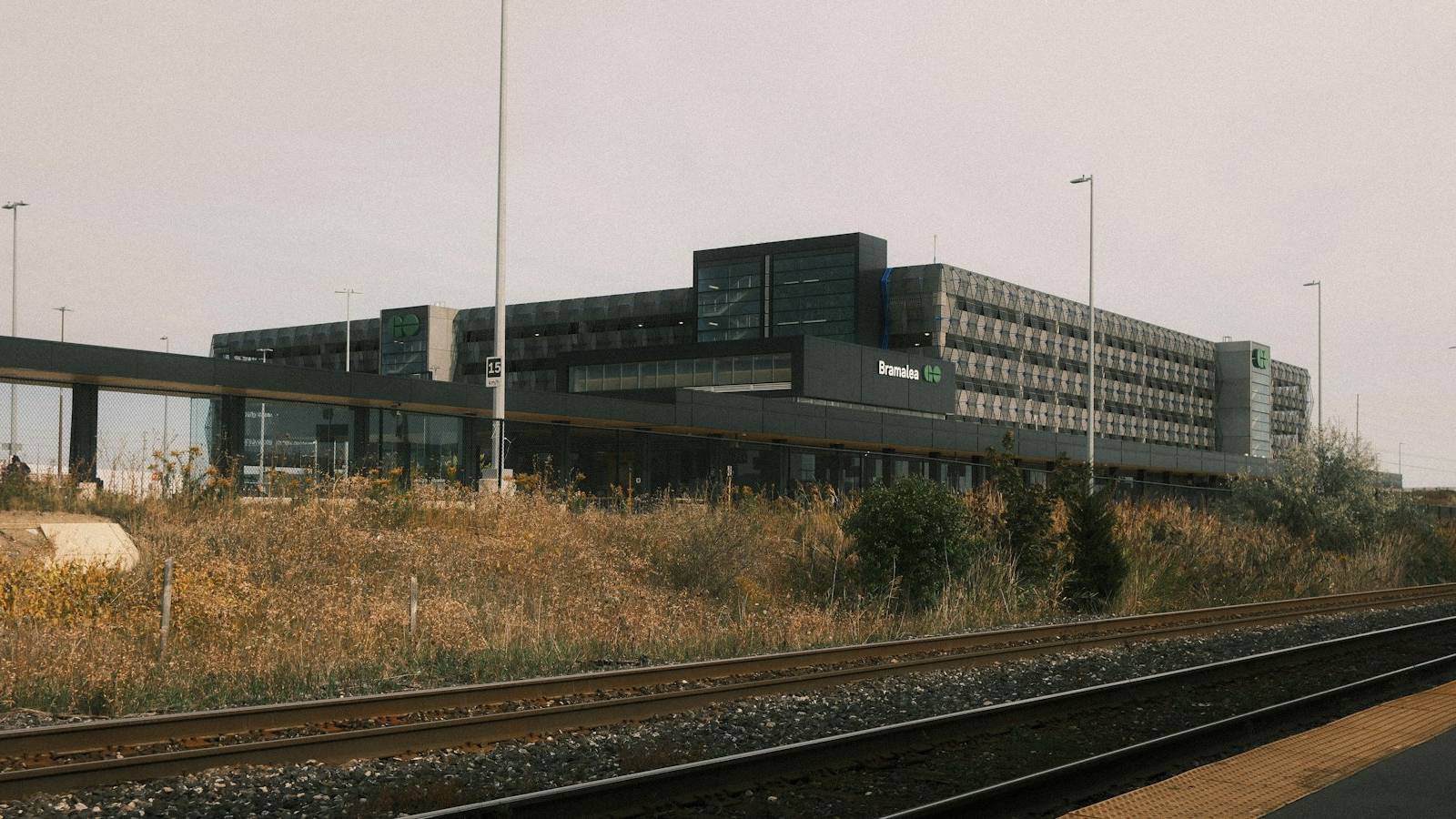
Two GO stations serve this part of Vaughan. Maple GO Station is 3.3 km away, about a six-minute drive. Rutherford GO Station is 4.6 km, around seven minutes.
Both sit on the Barrie line, which runs south into Union Station in downtown Toronto. For anyone working in the financial district, the university area or anywhere else within reach of Union, this is usually the route that makes a daily commute tolerable, because the travelling time is spent sitting down rather than steering.
The practical considerations are parking and frequency. Station parking fills early, which in practice means either arriving ahead of the crowd, being dropped off, or walking or cycling in the warmer months. Service frequency varies by time of day, so the published timetable matters more than the distance to the station does.
Having two stations within a short drive is genuinely useful. If one is full or disrupted, the other is a few minutes further on.
Option Two: The Subway
Vaughan Metropolitan Centre Station is 14.1 km from the community, roughly sixteen minutes by car. It is the northern terminus of the subway line that runs down into Toronto.
This route suits people whose destination is along the subway rather than at Union. Because VMC is the end of the line, trains begin there, which tends to mean a seat at the start of the journey rather than a scramble.
The drawback is the drive to reach it, which is the longest of the three options, and it is a drive through city traffic rather than along a highway. For an occasional trip it is easy. For a daily commute it is worth testing at the hour you would actually be doing it.
Option Three: Driving
Vaughan is served by Highway 400 running north to south and Highway 407 running east to west, and the community's position relative to both is a genuine part of its appeal for people who drive to work.
Highway 407 is the one that changes the calculation for a lot of households. It is a toll route, and the cost is real and recurring, but it is also the reason an east-west commute across the top of the Greater Toronto Area can be predictable rather than a daily gamble. Whether that trade is worth making is an arithmetic question specific to your destination and your tolerance.
Highway 400 connects south toward Toronto and north toward cottage country, which matters on Friday afternoons in summer in both directions.
Within Vaughan Itself
Not every trip is a commute downtown. A good deal of daily movement stays local, and for that the community is well placed: Carrville Community Centre is 0.3 km and walkable, Carrville Library 0.4 km, and the nearest schools are between 0.8 km and 2.9 km. Our article on schools and parks near the community covers those in detail.
York Region Transit operates local bus service across Vaughan, which matters most for households with teenagers, for anyone who would rather not run a second car, and for days when the weather makes a short drive unappealing.
Testing It Properly
The single most useful thing a buyer can do is drive the commute at the time they would really be doing it. A Sunday afternoon visit to a sales office tells you almost nothing about a Tuesday at eight in the morning.
Do it in both directions, because the evening return is often the worse half and rarely the one people test. If you are considering the GO, park at the station you would use and see what is actually available. And if two people in the household commute in different directions, test both, because a location that works beautifully for one can be awkward for the other.
Where It Sits
The honest summary is that this is a location with real options rather than a single dependency. Two GO stations within seven minutes, a subway terminus within sixteen, and two major highways is a broader set than many communities offer, and the value of that shows up on the days when one of them is not working.
For the wider picture of the area, see Living in Vaughan and the location guide. Details of the community itself are on the development page.
Have Questions About Pre-Construction?
Matthew Caporiccio can help you understand pricing, deposit structures, and availability at The Valleys of Thornhill and other pre-construction projects across the GTA.