A practical look at what actually changes when a household moves from Alberta to Vaughan: the paperwork with deadlines on it, how Ontario winter behaves differently, driving the 400-series grid, and the utilities and tax differences nobody warns you about.
Start with the paperwork that has a clock on it
Most of a move from Alberta to Ontario is ordinary logistics: boxes, dates, a moving company. A handful of items are time-limited, and they are worth handling first because insurance, a closing date and a school registration all tend to depend on them.
- Driver's licence. Ontario has licence exchange arrangements with other Canadian provinces, so an Alberta licence is normally exchanged rather than re-tested. Bring your Alberta licence and proof of your Ontario address to a ServiceOntario centre. Confirm the current document list and the deadline for new residents on the ServiceOntario website before you travel. The counter will not accept a near miss, and requirements change.
- Health coverage. Alberta Health Care Insurance does not travel with you. You apply for OHIP in Ontario, and eligibility turns partly on physical presence in the province, so keep your arrival date documented. Ask ServiceOntario what applies between your last day of Alberta coverage and your OHIP start date, and whether interim private coverage makes sense for your household.
- Vehicle registration. A vehicle brought in from Alberta has to be registered in Ontario, which generally means a safety standards certificate and proof of Ontario insurance before plates are issued. Ask ServiceOntario what your specific vehicle needs, and budget time for the inspection rather than assuming it happens the same day.
- Letter of experience. Ontario auto insurance is a separate market with its own rating rules. Before you cancel your Alberta policy, ask your insurer for a letter of experience setting out your years licensed and your claims history. Without that letter, an Ontario insurer may rate you as though you have no record at all.
If you are also buying here, the closing paperwork is a second track entirely. Our pre-construction buying guide walks through how a new-build purchase proceeds in Ontario, and working with a lawyer on a new-build purchase explains who does what at closing.
Ontario winter is wetter, not simply colder
Albertans arrive expecting winter and are usually right about the temperature and wrong about the texture.
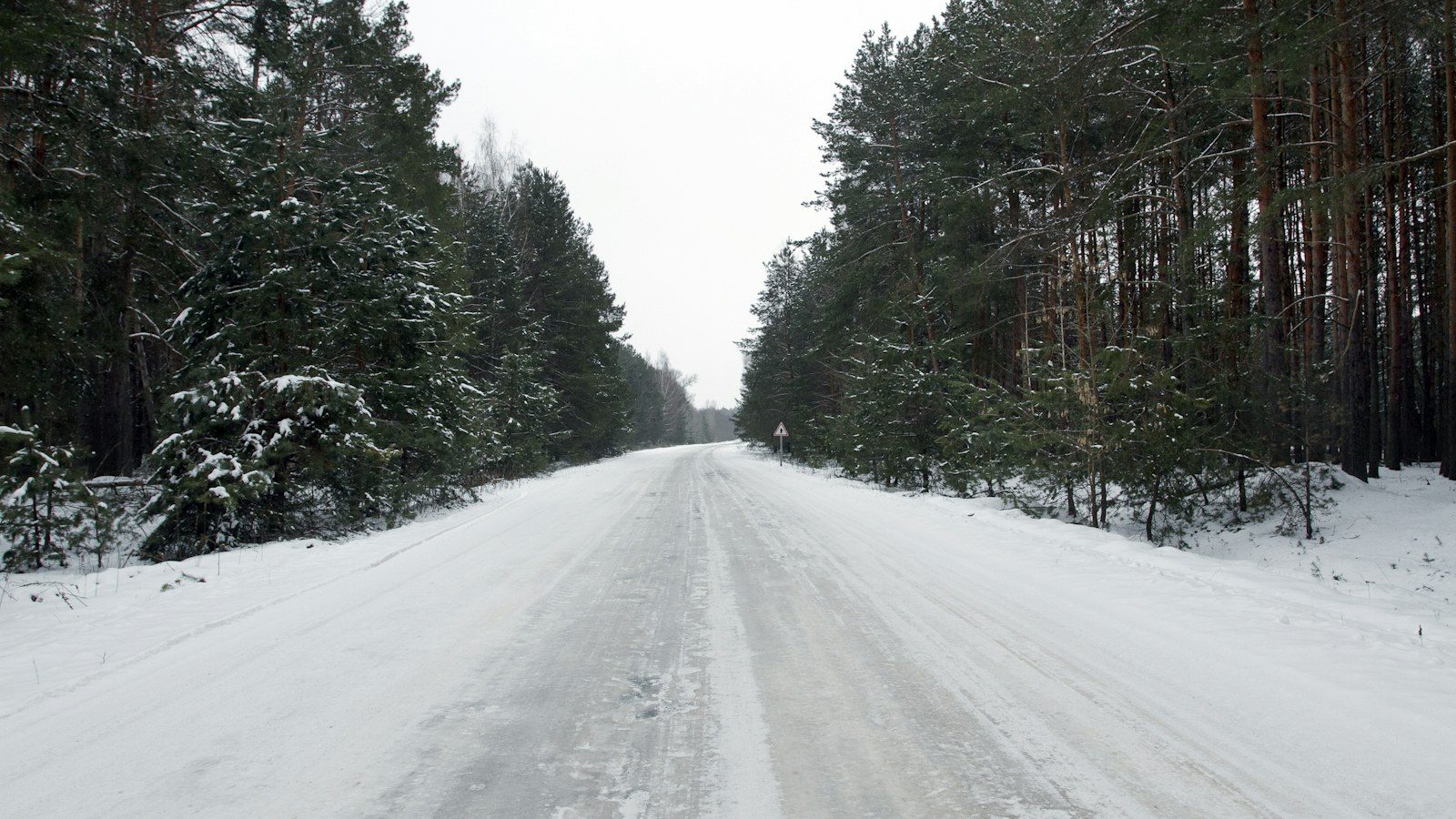
Much of Alberta gets a dry cold. Southern Alberta also gets chinooks, which break a cold spell with a day or two of warmth. Southern Ontario has neither. What it has instead is humidity, repeated freeze-thaw cycles, and precipitation that arrives as snow, then rain, then snow again inside the same week.
Three practical consequences:
- The snow is heavier. Wet snow is harder to move than dry prairie snow. A light aluminum shovel that worked in Calgary will bend. Many households here end up with a snowblower or a seasonal clearing contract, and new-community driveways on singles can be wide — the 2 and 3-car garage homes Greenpark Group builds at this community sit on 38' and 50' lots, which means more driveway to clear than a city lot you may be used to.
- Freezing rain is a real category. Ice storms close roads and bring down branches in a way snow usually does not. Keep a plan for a power interruption: a charged power bank, flashlights, a way to heat food.
- Freeze-thaw moves water around. Ice dams on eavestroughs and water pooling against a foundation are Ontario problems more than Alberta ones. Watch where meltwater goes in your first spring, and read lot grading, drainage and easements on a new Vaughan lot before you assume a wet spot is the builder's fault — or that it isn't.
If you are house-hunting in the cold months, what to look for on a winter drive through a Vaughan neighbourhood covers what the season actually reveals: how roads are cleared, where snow gets piled, which streets stay passable.
Driving here takes a different mental map
Alberta cities run on ring roads and named trails. The Greater Toronto Area runs on a numbered 400-series network layered over a concession-road grid, and the grid is the part newcomers underuse.
This community sits off Major Mackenzie Drive West between Dufferin Street and Bathurst Street, in the City of Vaughan. The postal city is Maple, and the surrounding area is known as Patterson and Carrville — despite the community name, it is not in Thornhill. If that sounds confusing, it is, and why The Valleys of Thornhill is in Maple, not Thornhill untangles it. For the broader logic of the street grid, see orienting yourself in Maple.
A few things to know before your first commute:
- Highway 407 is tolled. If you drive it without a transponder, the operator reads your plate and bills you. That is normal here and catches new arrivals by surprise. Decide deliberately whether a transponder is worth it for your routine.
- Winter tires are not mandatory in Ontario the way they are in Quebec, but they are common, and insurers here offer a winter-tire discount. Ask your broker how it applies to your policy.
- Road salt is heavier than you are used to. Undercoating and regular winter washes matter more in Ontario than in a dry prairie winter.
- Transit is a genuine option. Maple GO Station is 3.3 km away, about a 6 minute drive; Rutherford GO Station is 4.6 km, about 7 minutes; Vaughan Metropolitan Centre Station, on the subway, is 14.1 km and about 16 minutes by car. Commuting from The Valleys of Thornhill goes through the combinations in detail.
Utilities and services work through different parties
Alberta households are used to choosing an electricity and natural gas retailer. Ontario works differently: a local distribution company delivers electricity to your address, and under the regulated price plan you choose among pricing structures — time-of-use, tiered, and an ultra-low overnight option — rather than shopping for a retailer. Which structure suits you depends on when your household actually uses power, so look at your own pattern before deciding.
Water and wastewater, waste collection, and road clearing are split between the City of Vaughan and York Region, which is not obvious from the outside. Who looks after what in Maple explains the division, and setting up utilities, mail and waste collection covers the account-by-account sequence for a brand-new address. Confirm the specific providers for your lot against your closing package, because servicing in a new community is assigned street by street.
One Ontario habit to adopt early: check your municipality's rules on clearing the sidewalk and the windrow left at the end of your driveway by a plough. Those rules are municipal, they are published at vaughan.ca, and they are easier to read in November than in February.
The money differences show up twice
Alberta has no provincial sales tax. Ontario applies HST to a wide range of goods and services, and on a newly built home the tax treatment is specific enough to deserve its own read: see the HST rebate on a new home in Ontario.
Ontario also charges land transfer tax on a property purchase. Alberta does not — it charges land titles registration fees instead, which are a different order of magnitude. If you are budgeting from Alberta experience, that line will surprise you. Pre-construction closing costs in Ontario lists what shows up at closing, and property taxes on a new home in York Region explains how the ongoing bill is assembled once you are in. For your own numbers, run them through our mortgage calculator rather than carrying over Alberta assumptions.
Schools, errands, and the first few months
Ontario funds two parallel school systems, public and Catholic, which is a structural difference from what many Alberta families are used to. Boundaries change, so confirm your assigned school directly with the York Region District School Board or the York Catholic District School Board using the exact address, not a neighbourhood name.
Nearby, Anne Frank Public School is 0.8 km away, about a 1 minute drive; St. Anne Catholic Elementary School and Viola Desmond Public School are both 1.7 km; Alexander MacKenzie High School is 2.9 km, about 5 minutes. Schools and parks near The Valleys of Thornhill has the fuller list.
For daily life, Carrville Community Centre is 0.3 km and Carrville Library 0.4 km — both walkable. Mackenzie Health — Richmond Hill Hospital is 3.0 km, about 5 minutes, and Cortellucci Vaughan Hospital is 6.4 km, about 10 minutes. Daily errands in Carrville covers groceries and shopping.
The housing itself comes from three builders here, each delivering one product: Treasure Hill builds 2-car garage townhomes, Starlane Home Corp. builds 2-car garage 33' singles, and Greenpark Group builds 2 and 3-car garage 38' and 50' singles. If you are weighing those against each other, the builders page is the starting point.
Finally, give yourself a season before judging the place. Your first year living in a brand new community describes what a new neighbourhood is like while it is still being finished — which is a different experience again from moving into an established Alberta suburb. We are an independent information site, not a builder or their representative, so verify anything that affects a decision with the official source: ServiceOntario, the school boards, the City of Vaughan, and your own lawyer and insurer.
Have Questions About Pre-Construction?
Matthew Caporiccio can help you understand pricing, deposit structures, and availability at The Valleys of Thornhill and other pre-construction projects across the GTA.