An interprovincial move replaces a set of systems you have been enrolled in for years. Here is the order that causes the fewest problems, including what changes if you are also buying a pre-construction home in Vaughan.
Why an Interprovincial Move Needs Its Own Checklist
Moving from British Columbia to Ontario is not as complicated as moving between countries, and it is not as simple as moving across town. Nobody checks your paperwork at the provincial boundary. What happens instead is quieter: a set of systems you have been enrolled in for years stops applying to you, and you have to re-enroll in Ontario's versions, on Ontario's timelines.
Health coverage, your driver's licence, your vehicle registration and your car insurance are all provincial. So is the law governing a real estate purchase. Most of the deadlines attached to those things start running the day you become an Ontario resident, not the day you get around to the paperwork.
If you are also buying a new home that has not been built yet, you have a second set of dates running in parallel, and the two schedules interact in ways that catch people out. This article puts them in a workable order.
A note on what this site is: an independent information resource about The Valleys of Thornhill, a community in the City of Vaughan. We are not a government service, not a law firm and not a builder. For anything with a deadline attached, confirm the current rule at the source. ServiceOntario handles licences, plates and health coverage. Your own lawyer handles anything inside your purchase agreement.
Health Coverage Comes First
Your British Columbia Medical Services Plan coverage is tied to BC residency. Ontario Health Insurance Plan coverage is tied to Ontario residency, and you have to apply for it yourself, in person, with original documents. It is not transferred for you.
Ontario has applied a waiting period for new residents in the past, and the rules around that waiting period have changed in recent years. Do not take a number you read on a forum as current. Apply as early as you are eligible, ask ServiceOntario directly what the waiting period is on the day you apply, and keep your BC coverage active until Ontario coverage is confirmed in writing. If there is a gap, interim private coverage is worth pricing out.
One practical wrinkle for pre-construction buyers: an OHIP application needs proof that you live in Ontario. A signed agreement for a home that will not be finished for a while is not proof that you live here. In most cases your residency documents will come from an interim rental, which is one more reason to line up that rental before you fly out.
Your Licence, Your Plates and the Insurance Change Nobody Warns You About
The licence
Ontario and British Columbia have a reciprocal arrangement, so an experienced BC driver can usually exchange a licence for an Ontario one without sitting a road test. You will need to show your BC licence and, depending on your driving history, a letter confirming your years of licensed experience.
Ontario expects new residents to make the switch within a defined window, measured in weeks rather than months. Confirm the exact deadline with ServiceOntario when you arrive, and do the exchange before it lapses rather than after.
The vehicle
Bringing a car from out of province means registering it here, and that usually requires a Safety Standards Certificate from a licensed Ontario inspection station plus Ontario insurance already in place. Budget time for this. If the inspection turns up work that needs doing, you cannot plate the car until it is done, and you will be in a new city without a vehicle while you wait.
Auto insurance
This is the change that surprises BC drivers most. In British Columbia, basic auto insurance comes from a single public insurer. In Ontario, auto insurance is sold by private companies and you shop for it. Two insurers can quote very different numbers for the same driver and the same car.
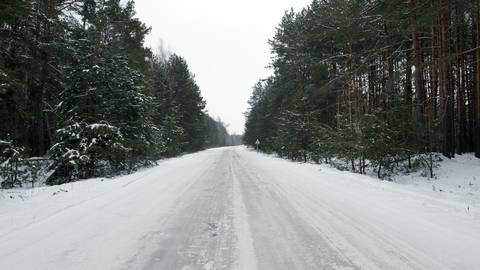
Before you leave BC, request your claims and driving history from your current insurer in writing. Ontario insurers price on that history, and it is considerably harder to obtain once you are three provinces away. While you are getting quotes, ask each insurer what winter tire discount they offer. Ontario does not mandate winter tires the way parts of BC do seasonally, but most people in York Region run them, and if you have only driven on the coast, see what to look for on a winter drive through a Vaughan neighbourhood before you decide how you feel about a north-facing driveway.
Buying Pre-Construction From Another Province
Use a lawyer licensed in Ontario
Real property law is provincial. A BC notary or a BC lawyer cannot close an Ontario transaction for you, and the document you sign at a sales office is governed by Ontario law and Ontario consumer protection legislation. Retain Ontario counsel before you sign, not after. Our guide on working with a lawyer on a new-build purchase covers what that person actually does and when.
The taxes are structured differently
BC charges a property transfer tax on a purchase. Ontario charges land transfer tax, calculated on its own schedule, and there is a refund available to qualifying first-time buyers. A municipal land transfer tax applies in the City of Toronto; Vaughan is a separate municipality, so a purchase here is not subject to it. Have your lawyer confirm the figure for your specific transaction rather than estimating from a BC frame of reference.
Sales tax also works differently. Ontario charges a single harmonized tax rather than separate federal and provincial taxes, and on a newly built home that tax interacts with a rebate that most builders build into the purchase price on your behalf. Read how the HST rebate on a new Ontario home works before you assume the price you were quoted is the price plus tax, or the reverse.
Ongoing property tax is also set locally, by the municipality and the region together. See property taxes on a new home in York Region for how the bill is assembled and why the first year on a brand new home often looks unusual.
Financing and the long gap
Your bank may be national, but a pre-approval obtained in Vancouver still has to survive to an Ontario closing date that could be well in the future. Lenders re-verify income and employment near closing, and a cross-country job change sits exactly on that fault line. Read getting a pre-approval that survives to closing and how deposits and timelines work in Vaughan together, because they are the same problem seen from two angles.
Practical consequence: plan for interim housing. A pre-construction closing date can move, and you cannot coordinate a moving truck from Burnaby against a date that is still provisional.
Where You Would Actually Be Living
The Valleys of Thornhill is in the City of Vaughan, in York Region, just off Major Mackenzie Drive West between Dufferin Street and Bathurst Street. The community name is a long-standing source of confusion: the postal city is Maple and the surrounding area is known as Patterson and Carrville. If you are searching listings or setting up accounts from the other side of the country, that distinction matters, and we have explained it here.
Three builders are building here, each delivering a different product: Treasure Hill builds 2-car garage townhomes, Starlane Home Corp. builds 2-car garage 33-foot singles, and Greenpark Group builds 2 and 3-car garage 38-foot and 50-foot singles. The builders page sets out who builds what.
For day-to-day orientation: Carrville Community Centre is 0.3 km away and Carrville Library is 0.4 km, both walkable. Anne Frank Public School is 0.8 km, a 1 min drive. Pioneer Park is 0.7 km. Maple GO Station is 3.3 km, a 6 min drive, and Rutherford GO Station is 4.6 km, a 7 min drive; Vaughan Metropolitan Centre Station, the subway terminus, is 14.1 km and a 16 min drive. Mackenzie Health — Richmond Hill Hospital is 3.0 km away.
If you are moving from a transit-dense part of Metro Vancouver, read the commuting guide honestly. This is a car-first neighbourhood with good regional rail, which is a different shape of mobility than a frequent-bus grid. School boundaries change and are the board's call, not a builder's, so confirm placement with the relevant board directly; our schools and parks overview explains how to check.
Household Set-Up Once You Have Keys
Utilities, mail forwarding and waste collection are all set up by you, not by the builder, and in a brand new subdivision some services start later than others. Our walkthrough of that process lists what to call and in what order. Update your address with the Canada Revenue Agency early, since benefit payments and tax correspondence follow it.
Expect a settling-in period that has nothing to do with provinces. New communities have construction traffic, unfinished landscaping and amenities that arrive on their own schedule; your first year in a brand new community describes what that is actually like.
A Reasonable Order of Operations
- Before leaving BC: request your driving and claims history in writing, gather identity documents, retain an Ontario lawyer, and secure interim housing.
- First week in Ontario: apply for OHIP and confirm the current waiting period; keep BC coverage until Ontario coverage is confirmed.
- First month: exchange your licence, obtain Ontario auto insurance, get the safety certificate and plate your vehicle.
- Ongoing: update CRA and banking addresses, register children with the appropriate school board, and keep your lender current on any employment change.
- Near closing: let your lawyer confirm land transfer tax, adjustments and the tax treatment of your specific purchase.
If something on this list is unclear for your situation, the fastest path is a direct question to the body that administers it. You are also welcome to get in touch with questions about the community itself.
Have Questions About Pre-Construction?
Matthew Caporiccio can help you understand pricing, deposit structures, and availability at The Valleys of Thornhill and other pre-construction projects across the GTA.